
This franchise pays BEFORE opening
This Franchise Builds a Revenue Machine Before the Doors Even Open
Every once in a while, a trend stops being a trend and becomes a permanent shift in how people think about the way they do things.
Right now, protein is the first example that comes to mind for me, and that might seem completely out of the blue, so let me explain why.
For starters, 61% of Americans increased their protein intake in 2024, which is up from 48% in 2019.
That’s a generational behavior change picking up speed, and major brands across EVERY food category have noticed.
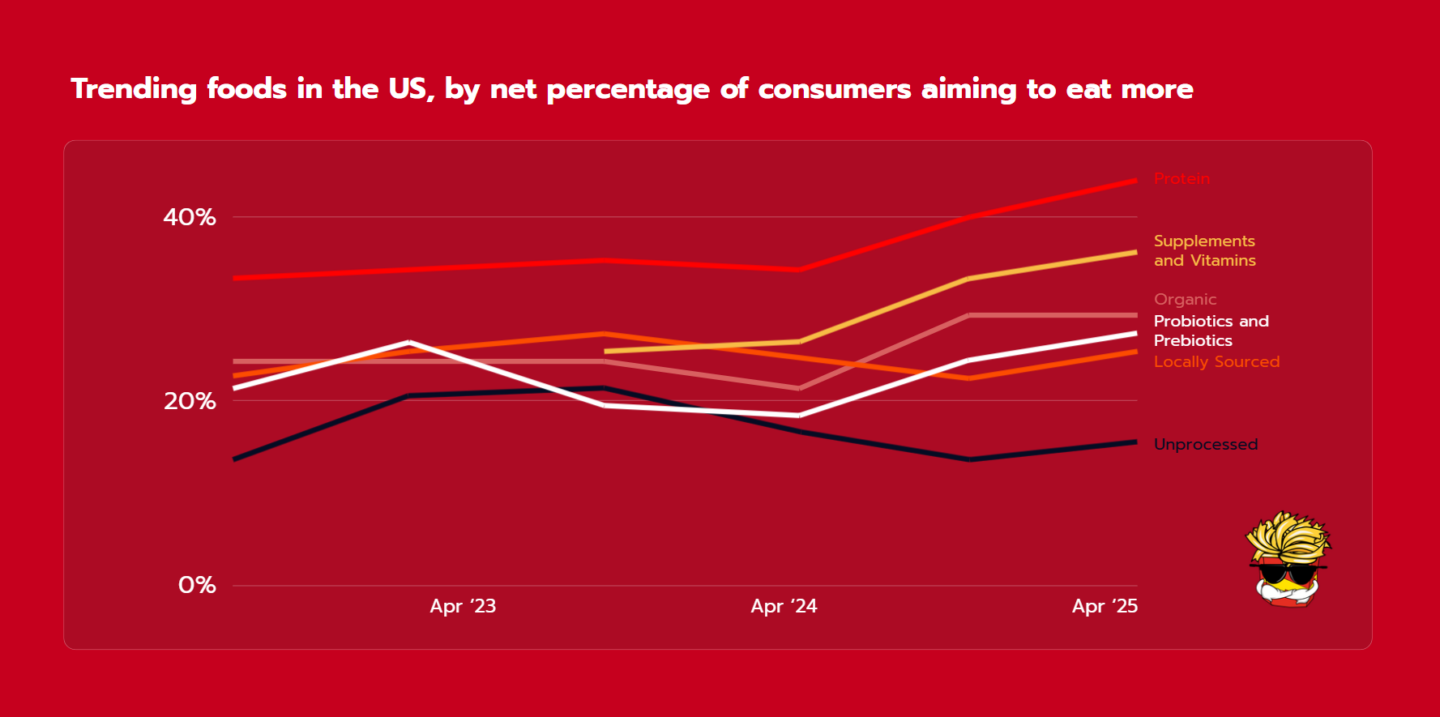
As you can see above, a 2025 Bain & Company survey found that 44% of U.S. respondents said they want to increase their protein intake, up from 34% in the same period in 2024.
The food industry’s response? Protein the living daylights out of everything.
Walk down any grocery aisle, and you’ll see all the packaging…protein pasta, protein water, protein cereal, protein ice cream, and the list goes on and on.
Kraft Heinz is even rolling out new packaging to highlight the protein content in its cold cuts!
Brands that have been around for decades are now reframing their entire identity around grams-per-serving.
Reese’s launched a protein bar, and even your morning coffee is getting in on it.
I could probably write an entire article ranting about this, but I think you get the point here.
Now that you understand what I will dub the protein apocalypse, things are starting to get messy for consumers as a result.
When everything claims to be a protein source, it starts to feel like nothing is a protein source. The signal gets lost in the noise.
A number of consumers avoid some high-protein snacks entirely due to concerns about hidden sugars and bloating from sugar alcohols, or other ingredients that these brands sneak into a lot of products marketed as “high-protein.”
People want the benefit, but they just don’t always trust what’s on the label, and for good reason.
That gap between consumer demand and consumer trust is exactly where Better Blend shines.
Better Blend is a Cincinnati-born smoothie and bowl franchise built around what most of these brands just advertise.
You’ve got delicious dietitian-approved recipes and high-protein, low-sugar, macro-balanced options designed for daily consumption, rather than scraping around to find something healthy on the random Tuesday you’re motivated.
Founded by Isaac Hamlin in 2018, the brand came out of a real-world need.
Hamlin was playing rugby at the University of Kentucky and looking for a pre-game fuel option that wasn’t a heavy meal.
He developed protein smoothies that worked, went on to earn first-team SEC All-American honors, and eventually realized his hometown needed access to the same kind of nutrition, so he opened the first Better Blend location that summer.
10+ locations later, the brand has earned a Forbes “30 Under 30” nod and the attention of multi-unit franchise operators across the country.
The product line is built for repeat, daily use. No ingredient sleight of hand, either.
What you see is what you get, and that kind of transparency turns first-time customers into daily regulars.
There’s also something worth noting about what it means to build a brand around purpose, too.
Hamlin created Better Blend because he believes the world is healthier when people have access to real nutrition. The idea of riding a trend wasn’t a part of the thought process.
That distinction definitely matters in franchising, because purpose-driven brands have an engine that marketing budgets can’t replicate.
When the roadblocks hit (and in any business, they will), operators who are genuinely bought into the mission have a reason to push through that goes beyond the P&L.
It’s the same psychology you see in someone who actually commits to a health journey.
The goal isn’t just to look different. It’s to become different.
So let’s get into it. I’m going to break down why Better Blend’s model is built differently than the majority of brands I’ve seen in this niche, starting with how they figured out how to make money before the doors even open.
Brand Awareness on Wheels, and the Revenue That Comes With It
Most franchise models typically work like this: find a location, sign a lease, build out the space, hire and train staff, open the doors, and then FINALLY start generating revenue.
The gap between signing and opening can easily run 6-12 months.
During that stretch, the franchisee is spending money and waiting patiently (or impatiently) for their vision to finally take shape.
Better Blend runs a different play that really jumpstarts its momentum in a clever way.
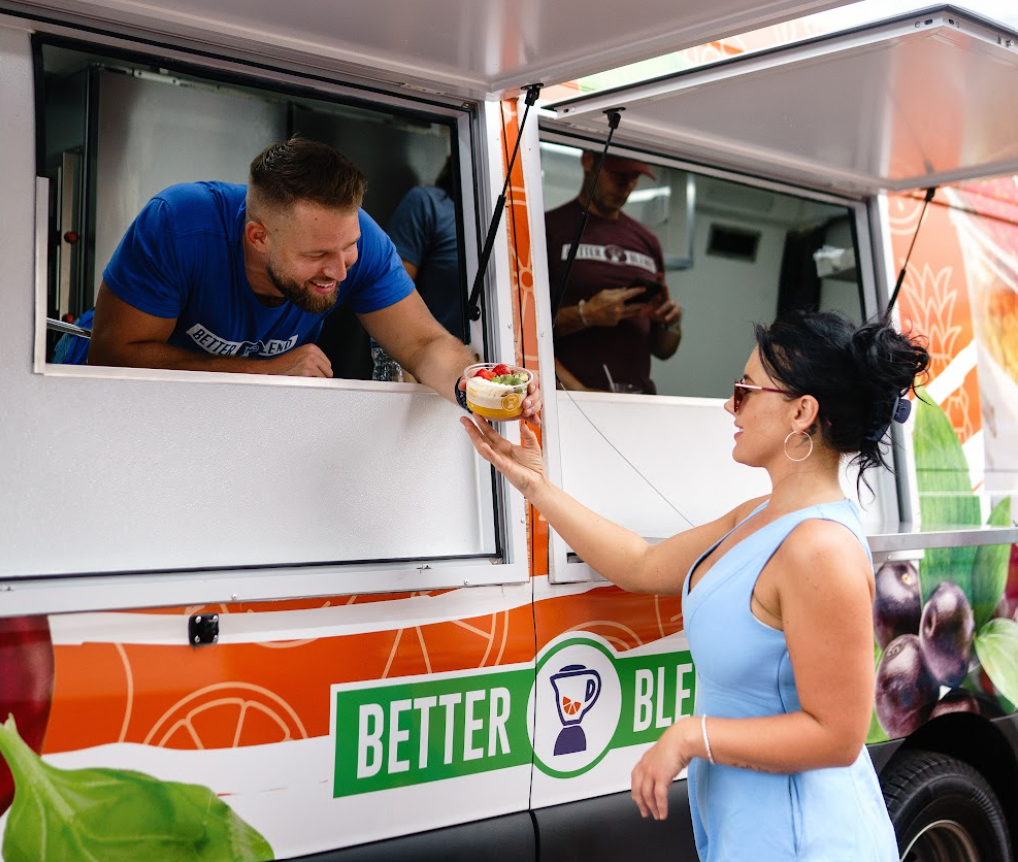
That’s because mobile units are baked into their franchise model. Franchisees can operate a van or mobile unit before their storefront opens, and before the first smoothie gets blended behind a counter.
That unit becomes a dual-purpose asset from day one because it generates revenue, and it puts the brand in front of people in all the right locations, like gyms, college campuses, corporate parks, community events, farmer’s markets, and wherever else the target customer already spends their time.
Think about what that does for a new franchisee.
Instead of waiting for your community to find you, you’re going to them.
Every bowl you hand out is a trial, and every event you show up to is a brand impression.
By the time your storefront opens, you’re basically following up and continuing your relationships instead of introducing yourself.
That’s a fundamentally different starting position.
There’s also a confidence-building element here that doesn’t show up in the financial projections but absolutely matters all the same.
Operating a mobile unit before the grand opening means the franchisee has already figured out their own workflow, trained their team in a lower-stakes environment, and started building the muscle memory of the business.
The storefront launch becomes a logical step forward instead of a leap into the unknown.
Most food and beverage concepts have one bet, which is open the store, then hope the traffic comes.
Better Blend runs a mobile awareness machine before the store ever opens, and gets paid doing it.
Grand Opening Demand, Built Before Construction Begins
The hardest months for any new food and beverage operator are the first ones, and that’s because every mistake has a cost.
After all, you’re building habits in a community that doesn’t know you exist, then learning what sells and what sits with cold foot traffic.
Better Blend’s mobile-first sequencing changes that dynamic in a meaningful way.
When a franchisee operates a mobile unit in the months leading up to their grand opening, they’re generating revenue, but they’re also building a customer base.
That also means they’re collecting data on what their local market responds to and creating anticipation for the exact people who are going to walk through the door when the storefront opens.
Think about the practical difference here. A traditional food concept opens with zero existing relationships in that community.
Better Blend operators who’ve been running mobile units show up on grand opening day with regulars who already know the brand, trust the product, and may have even been waiting for the convenience of a permanent location.
The typical ramp-up period of weeks or months, where revenue is low and operators are figuring out their footing, gets compressed significantly when your audience already exists.
You’re pulling existing demand into a fixed location, rather than spending your first months trying to create demand from scratch.
I think there’s also a pretty compelling data argument here.
The mobile unit gives you a lot of valuable info like which products move fastest in your specific market, what times of day matter the most, and where the pockets of your target customer actually are in your territory.
I believe it’s the smartest risk management move in the model.
How Multi-Channel Revenue Changes the Slow Season Conversation
For single-channel food and beverage businesses, when things slow down, everything slows down together.
Foot traffic dips, followed by revenue dips, and the operator spends their time hoping things pick back up.
From this standpoint, Better Blend is structured differently.
The brand runs four revenue channels simultaneously. You have the storefront, the mobile unit, online ordering, and catering.
Each one serves a different customer behavior and a different occasion.
The storefront drives consistent daily traffic, which could be the regular who stops in every morning after the gym, or the office worker who swings by for lunch.
Ideally, some of these will become repeat visits, built on habit and proximity.
The mobile unit extends the brand into new contexts. Think corporate events, fitness expos, school activations, community gatherings, and so on. Every deployment is a revenue event and a brand touch.
Online ordering captures a different customer entirely, which may be the person who plans ahead, or the group order that comes in on a Tuesday because someone in the office decided it was smoothie day.
It extends the brand’s reach without requiring the customer to change their behavior.
Catering covers the occasions that don’t fit neatly into any other category, like, for example, a company lunch or a wellness event.
These are often high-ticket, high-volume moments that can carry an operator through a slow week.
What does all of this do for the franchisee in practical terms? It creates a floor.
When one channel has a slow stretch (e.g. weather pulls people off the street, or an event gets canceled), the other channels don’t stop.
The operator has multiple ways to hit their number on any given week, and over time, that stability becomes a platform for multi-unit expansion.
When unit economics are predictable and revenue is diversified, the math on opening a second location gets a lot cleaner.
Better Blend’s model is built for the operator who’s thinking beyond location one from day one.
Most of their franchisees are already committed to multi-unit development. That’s what happens when the model is designed for scale from the beginning.
Where Mission Meets Momentum
You probably know already that the wellness industry isn’t slowing down anytime soon.
Consumer demand for functional, nutritious food is accelerating.
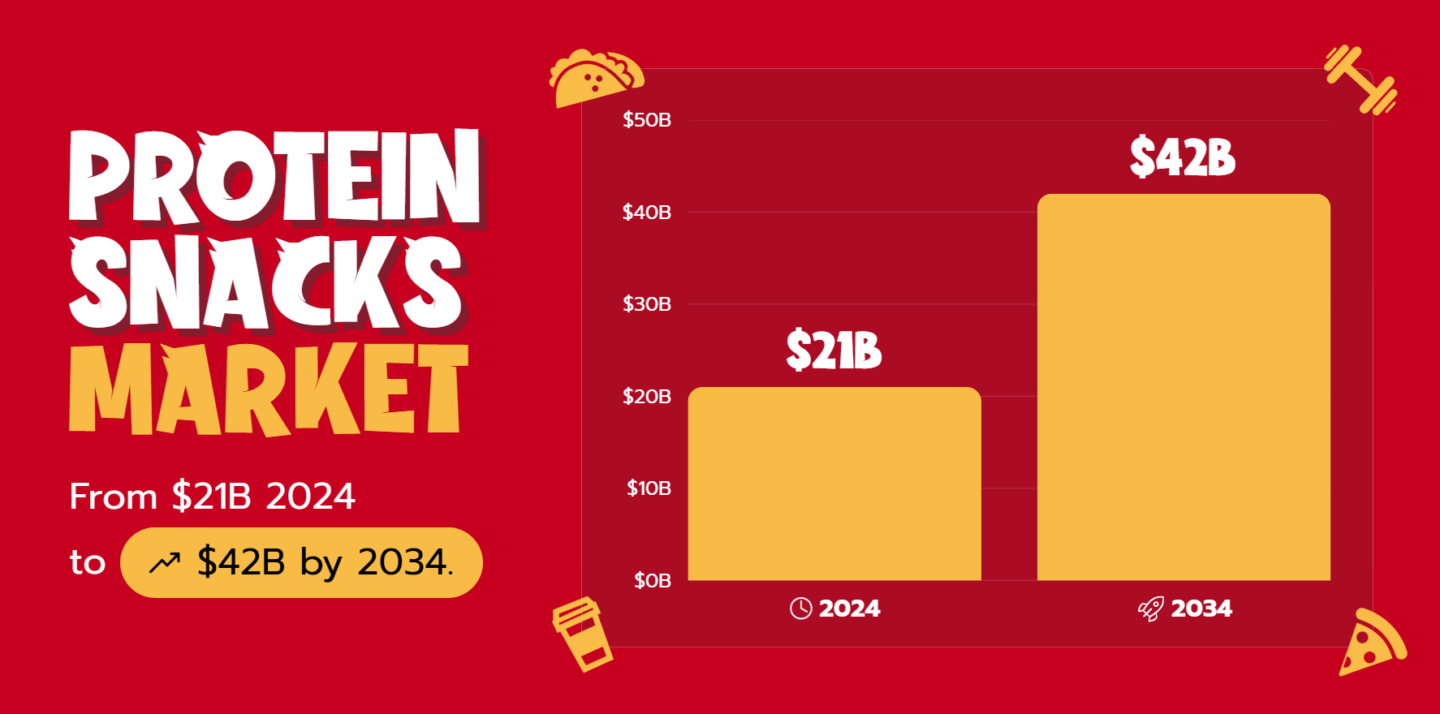
The protein snacks market alone is expected to reach $42 billion by 2034, up from $21 billion in 2024.
The window to plant a flag in this category, while the infrastructure to support it is still being built, is open right now, but it won’t be open forever.
The operators who move first in their markets are the ones who get to define the category locally.
Most franchise concepts in this space hand you the traditional playbook, which is a location with a menu and manual.
You open the store and start grinding, but hope the brand does enough of the heavy lifting.
When the slow months hit, you ride it out and wait for traffic to return.
Better Blend gives you a unique system designed to cover as many bases as possible, which includes:
- Mobile revenue before you open
- A built-in customer base before the grand opening
- Four channels generating revenue instead of one
- Training and ongoing support from a leadership team that is actively invested in the performance of its franchisees
- A brand with dietitian-backed credibility in a market that is increasingly skeptical of health claims
- And a founder who built this out of a genuine belief that better nutrition should be accessible, instead of just another vehicle for a buzzword on a label
If you’ve been watching the health and wellness category and wondering whether the timing is right, the model exists.
And in this case, you’re looking at one that is focused on building routines, confidence, discipline, and healthier habits into people’s everyday lives.
For the right operator, that’s the deeper appeal here, because selling another trendy snack with “high protein” slapped on the label is already being done everywhere else.