

What Happens When Boutique Fitness Goes to the Dogs?

It feels like dogs these days have a social calendar and a wellness routine that may be healthier than a lot of the people who own them.
That almost sounds like a joke…until you look at how much Americans spend on their animals.
The U.S. pet industry generated $158 billion in 2025, and is projected to reach $165 billion in 2026.
For context, about 95 million households own pets.
The category has matured into an economy built around animals who sleep in our beds and occasionally receive birthday parties with better catering than a toddler.
Dog training, however, still resembles an outdated Craigslist category in a surprising number of markets right now.
Try searching “dog trainer near me” wherever you are, and you’ll probably find solo trainers, board-and-train programs, and independent operators with wildly different methods.
The experience is usually pretty transactional overall, too. Your puppy either ignores “come here” or treats every visitor like Taylor Swift arriving at the Super Bowl.
You buy six sessions and address the behavior, then you graduate.
What’s next, though?
I mean, it’s not like dogs stop needing stimulation because they learned how to do a few tricks.
Their people still want places to take them, but also need some reassurance that the lovable creature that’ll happily eat a dryer sheet can be a functional member of society.
I feel like the pandemic made that gap a lot harder to ignore.
An ASPCA survey estimated that 23 million American households acquired a dog or cat during the COVID-19 crisis.
Suddenly, millions of people had companionship during a lonely, bizarre stretch of history.
They also had puppies being raised while guests were rare, and going to work meant walking twelve feet to the kitchen table.
Those pets became family, but many of them also needed practice living in the world.
Mark Van Wye saw the broader opening many years earlier.
His vision became Zoom Room, an indoor dog training gym that borrowed a familiar playbook from boutique fitness.
It’s attempting to do for dog training what Orangetheory, Pilates, and countless boutique fitness brands did for exercise, by transforming a very fragmented, transactional service into a recurring ritual built around a communal experience that people look forward to repeating.
Pilates studios don’t hand you a diploma after six weeks, so why should meaningful dog training end that way?
Let’s look at the whitespace Zoom Room spotted, and whether this franchise can become a defining brand in dog training.
The Founder Who Studied People First

Van Wye came to dog training from education and brand design.
He had built learning programs for orgs including the Boys & Girls Clubs of America and understood how to teach nonexperts to teach others.
That background became useful because the dog training industry depended heavily on individual talent.
A brilliant local trainer could build a devoted following, but cloning that person across the country? That’s a whole other challenge entirely.
Van Wye began with a more scalable question: Could the curriculum carry more of the load?
In 2007, he opened the first Zoom Room in Culver City, California. The early concept was, in his words, a “Gymboree for dogs.”
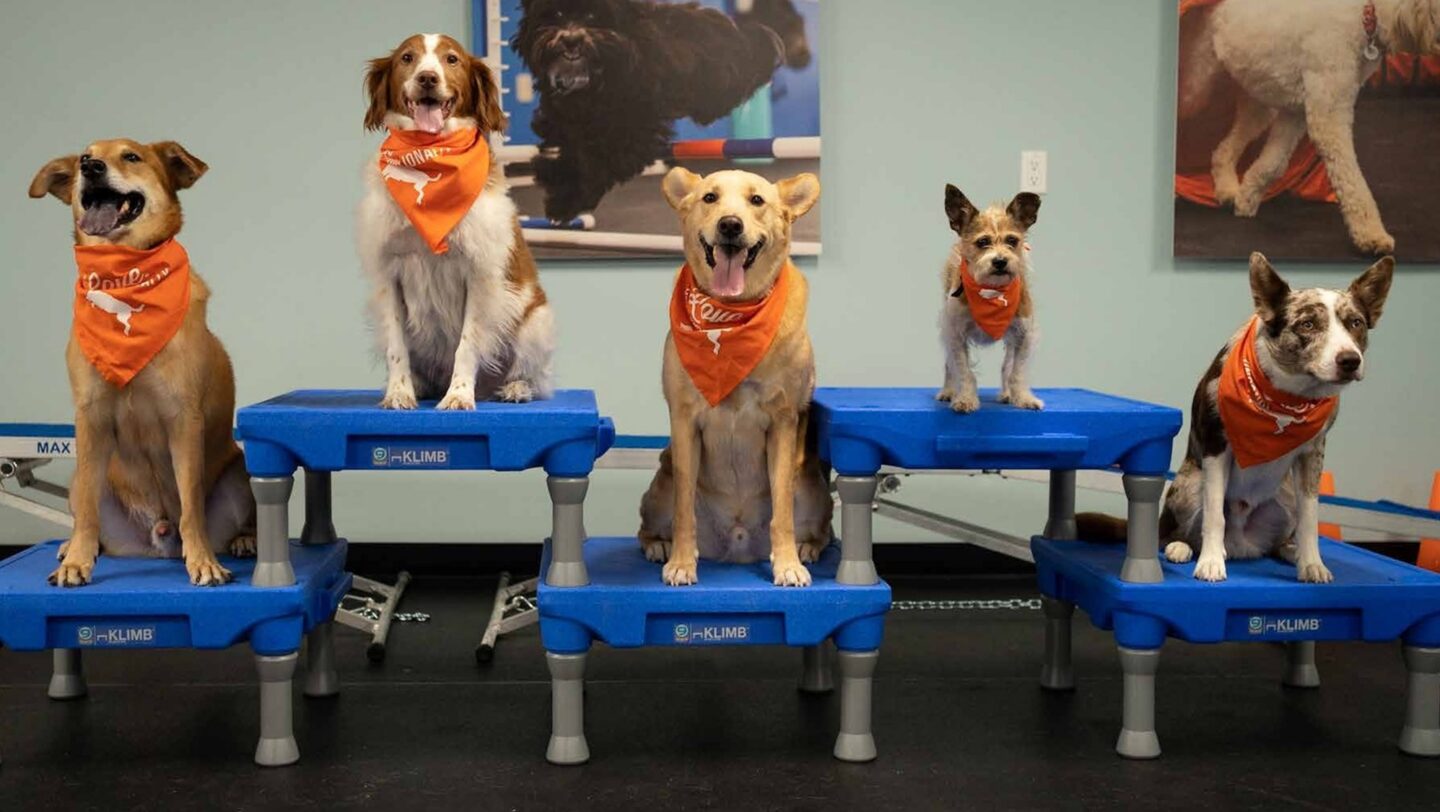
Owners stayed in the room and learned alongside their pets, and positive reinforcement shaped the curriculum. Group classes created controlled exposure to unfamiliar dogs, people, noises, and environments.
The emotional payoff went far beyond obedience.
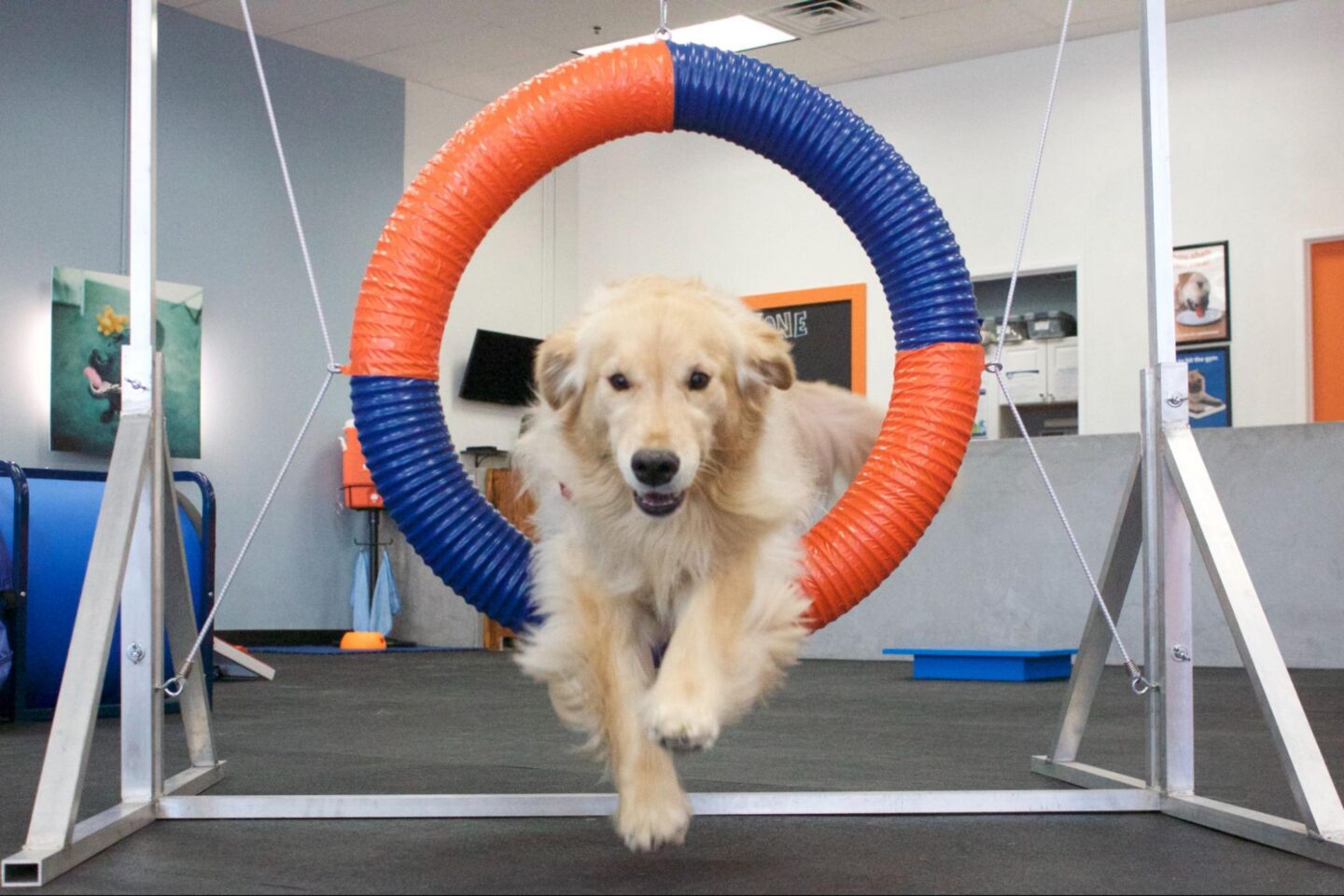
When your dog clears an agility jump or finally looks at you instead of launching toward the door, you feel proud and more capable. That victory follows both of you home.
Zoom Room’s line captures the model of “We don’t train dogs. We train the people who love them.”
Owners become the consistency engine, reinforcing lessons between visits and strengthening a relationship that may last 15 years.
Classes account for roughly 80% of the business. Workshops, private sessions, parties, and offerings such as Urban Herding and Pup-lates add variety.
A customer can arrive with a chaotic puppy that continues into obedience, and keeps returning for socialization.
Zoom Room reports an 87% retention rate and 4.86-star systemwide Google average.
Those company-provided figures point toward the behavior this model is designed to create, which is habit.
The Growth Spurt That Bit Back
Zoom Room’s journey wasn’t a fairy tale, by any means.
The company officially began franchising in 2009 and reached 20 units within five years, and early franchisees certainly had their work cut out for them, since no one single national pet company (including PetCo or PetSmart) had figured out how to make dog training scalable and profitable until Zoom Room began to take off.
By 2016, Van Wye slowed expansion while focusing on further refining the model, strengthening unit economics, improving systems, and raising the bar for franchisee qualification.
In 2018, he launched Zoom Room 2.0, marking a new chapter of growth for the brand.
Zoom Room resumed growth, then COVID scrambled the board.
Cheap capital plus enormous career disruption during that era produced a flood of first-time franchise buyers across franchising in general.
A meaningful number lacked the operating experience and aptitude required, and as a result, the consequences surfaced over the following several years.
Of course, some of these are extreme outliers relative to the rest of the system, but part of restoring system health is recognizing that some locations ultimately need to close rather than pretending every operator can be coached back toward the mean.
Pet ownership surged, and the brand jumped from 14 locations in 2020 to roughly 68 by early 2024.
As we all know, passion can get someone through the discovery-day door, but it can’t manage labor, preserve working capital, read a P&L, or build local demand.
Van Wye has spoken candidly about those impulse buyers. Now, the company is considerably more rigorous today about operating aptitude and evidence that someone can successfully execute. Loving dogs was never intended to be the qualification for owning a Zoom Room.
Of course, anonymous accounts shouldn’t substitute for the Franchise Disclosure Document, but they do supply useful validation questions:
How many locations closed?
What did owners invest?
How long was the ramp?
How responsive was support?
One criticism in particular has a well-documented response.
Van Wye says a franchisee survey identified third-party software as the system’s largest complaint: a patchwork of tools built for gyms and salons, with none of them specifically designed for dog training.
Zoom Room’s answer was to build its own proprietary platform to run the entire business in one system, designed around dogs from the ground up. That includes tasks like scheduling, point of sale, customer communications, marketing, inventory, the consumer website, and performance dashboards.
Since every location runs on the same platform, franchisees also see their numbers benchmarked against the rest of the network in real time.
Owning the software outright means Zoom Room controls its own features and fixes, and no outside vendor can raise the rent. Their wholly owned tech stack also includes their own proprietary ERP and even their own CRM custom-built for Franchise Development.
It demonstrates that leadership heard a recurring complaint and changed the infrastructure beneath the business. For investors, I think that should carry some weight.
The Operators Behind Zoom Room’s Next Chapter
The newer Zoom Room leadership team looks purpose-built around the lessons of the earlier era.
Van Wye remains CEO, and Ron Coughlin, former chairman and CEO of Petco, joined as chairman and invested in the brand. Don Allen, whose operating background includes Orangetheory Fitness and F45, serves as COO.
Darris Cooper, Director of Training and Socialization, helped lead the removal of shock collars from Petco stores nationwide. His appointment reinforces Zoom Room’s positive-reinforcement commitment as customers increasingly care about outcomes and methods.
You see plenty of little traces of Petco and Orangetheory in Zoom Room’s brand now, and the Venn diagram creates some interesting connections.
You’ve got class-based scheduling, memberships, local community, coach development, and repeat engagement, all of which exist as muscle memory in boutique fitness.
Members of the corporate team have also invested in franchises.
Conversations change when people designing support understand leases, or even the exquisite joy of an HVAC surprise.
Boutique concepts often fight over expensive Class A sites, but Zoom Room can also operate in Class B or flex retail, widening the site pool and potentially lowering occupancy costs.
Landlords still receive an experiential tenant with repeat traffic.
Zoom Room also became the first national dog training franchise to integrate Fi smart-collar tracking into its gyms.
Think of it as Fitbit for dogs, with activity data and even leaderboards.
Gamification made fitness sticky for humans, and now the idea is playing out for dogs as well.
A Big Bet on Best Friends
Zoom Room has publicly targeted 500 locations by 2030.
Those specific goals create accountability, but they also reveal the size of the brand’s ambition, all built around the idea that this team sees room for a national category leader while dog training remains fragmented at the local level.
Pet spending keeps climbing, while owners increasingly organize things like travel, housing, and weekends around their dogs.
A well-socialized animal can participate in a lot more of their owner’s lives, giving training value far beyond learning new tricks.
A dog who can comfortably participate in a growing list of activities is a much larger proposition than a dog who just knows more commands, which I think is central to where Zoom Room is going.
The model blends service revenue, memberships, events, and retail with flexible real estate. Its history makes diligence essential.
Prospects should speak with successful and struggling owners, investigate closures, pressure-test working capital, and request a technology demonstration.
Ultimately, Zoom Room’s history is a series of deliberate learning and rebuilding, through owning the systems that are central to how stores operate, and implementing valuable feedback.
Franchise systems that survive 20 years with 40+ locations are a very small, elite band (~8.5% in the U.S.), and Zoom Room earned its place in it.
The company carries those growing pains alongside leaders from Petco, Orangetheory, F45, and the franchisee community.
Now, it has an owner profile and purpose-built infrastructure that looks clearer than ever.
I think at the end of the day, people just want well-behaved dogs that are capable of participating more fully in their lives.
It creates a snowball effect, where socialization produces confidence, and confidence creates access to travel to more public spaces.
Zoom Room turned that desire into a ritual.
If it can preserve unit economics while scaling, 500 locations begins to look like a map of the whitespace.
For investors who understand community-based businesses and love dogs, Zoom Room offers a credible platform for a market seeking its defining brand.